Antique Ruby “Black Glass” Medicine Bottle – Late 19th Century, Hand-Finished, Glows Red in Light
$180.00
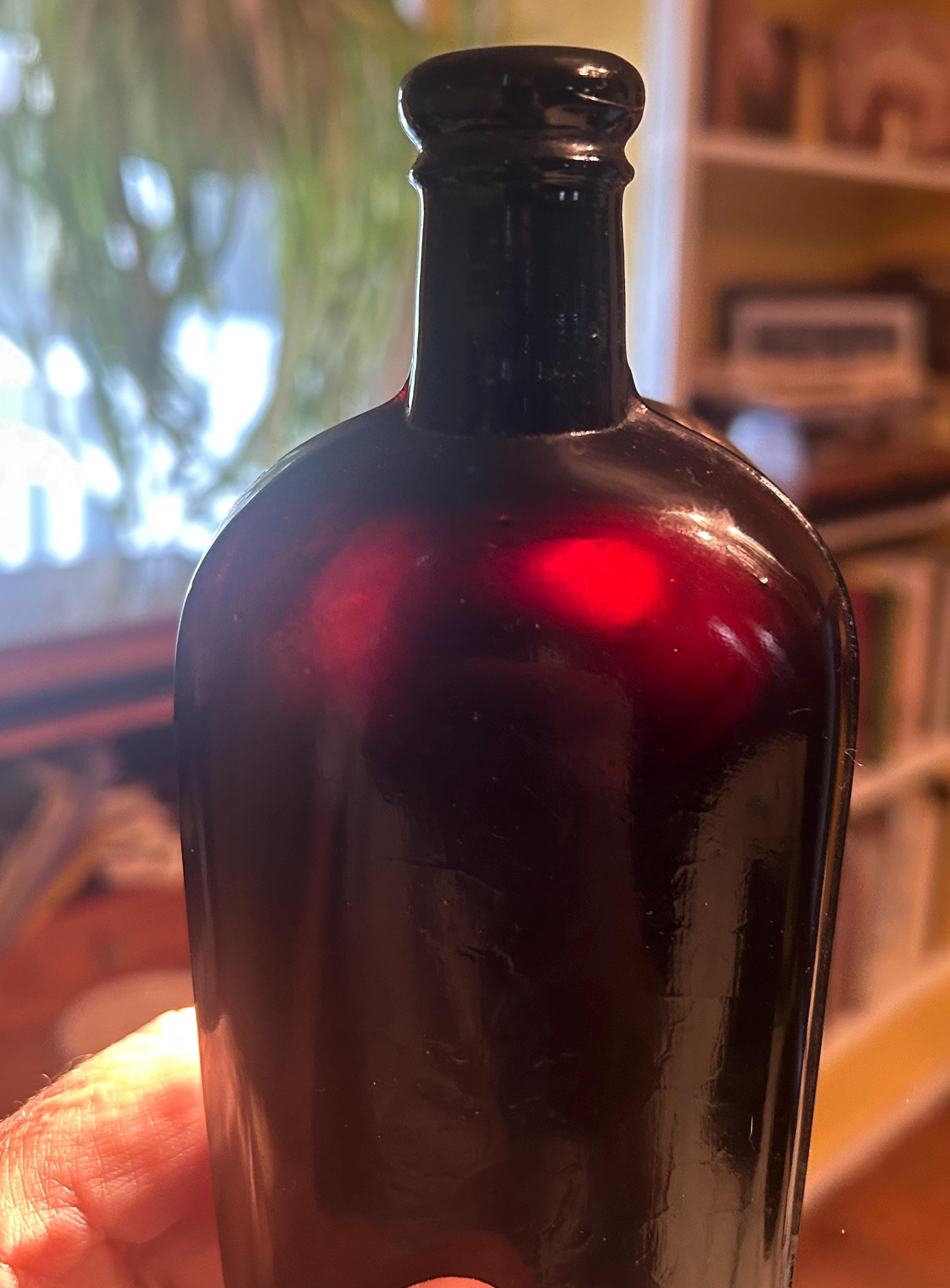
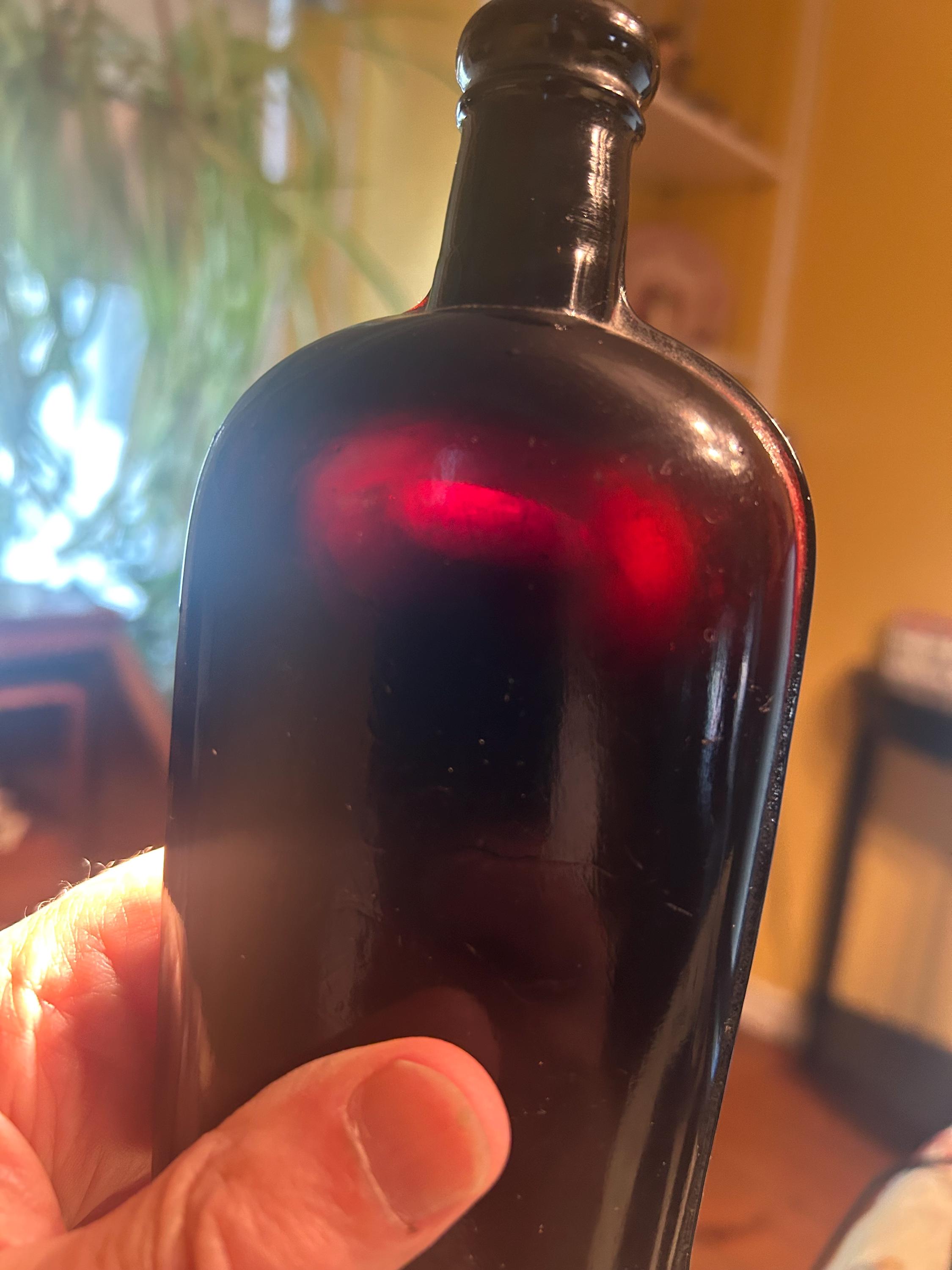
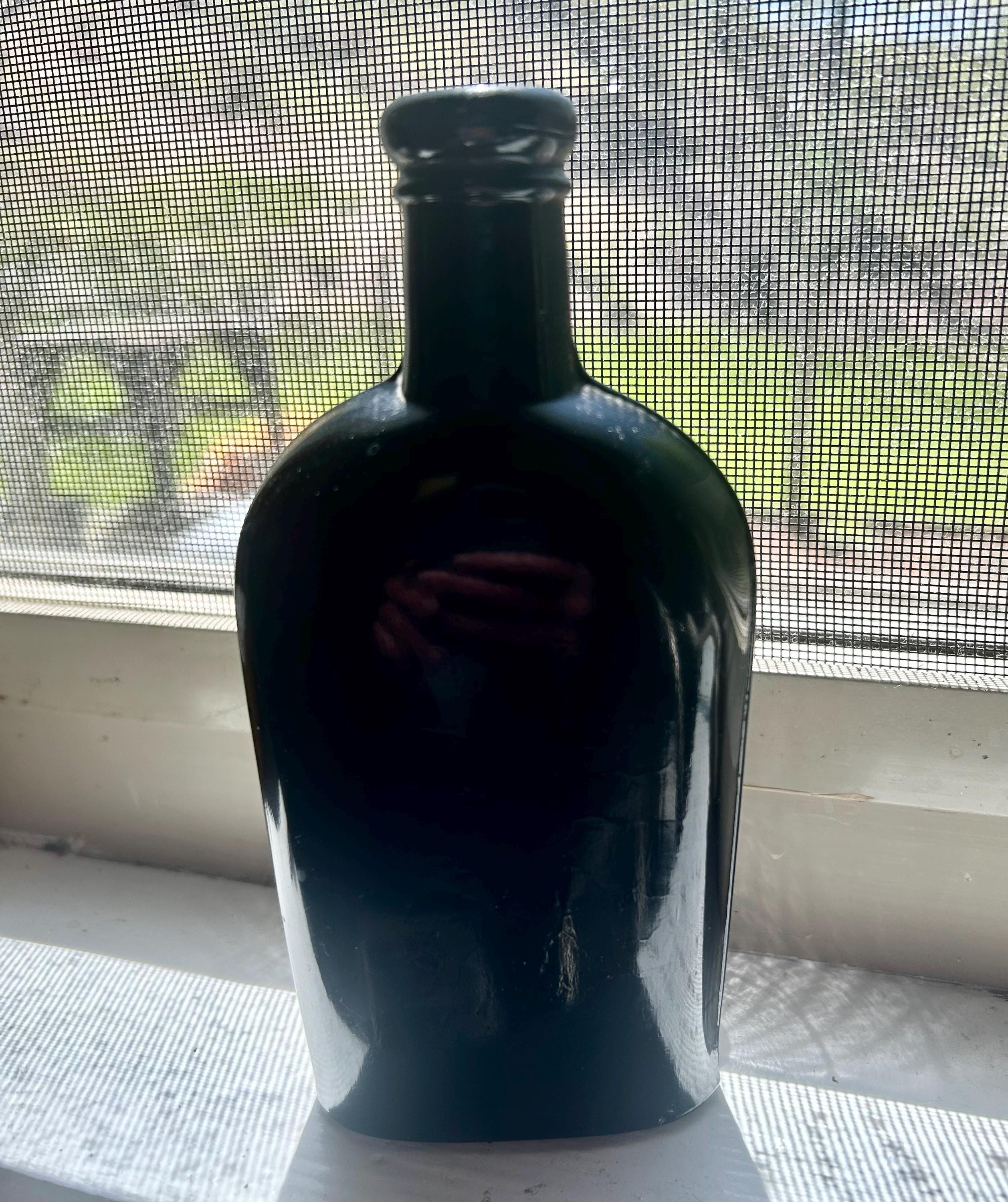
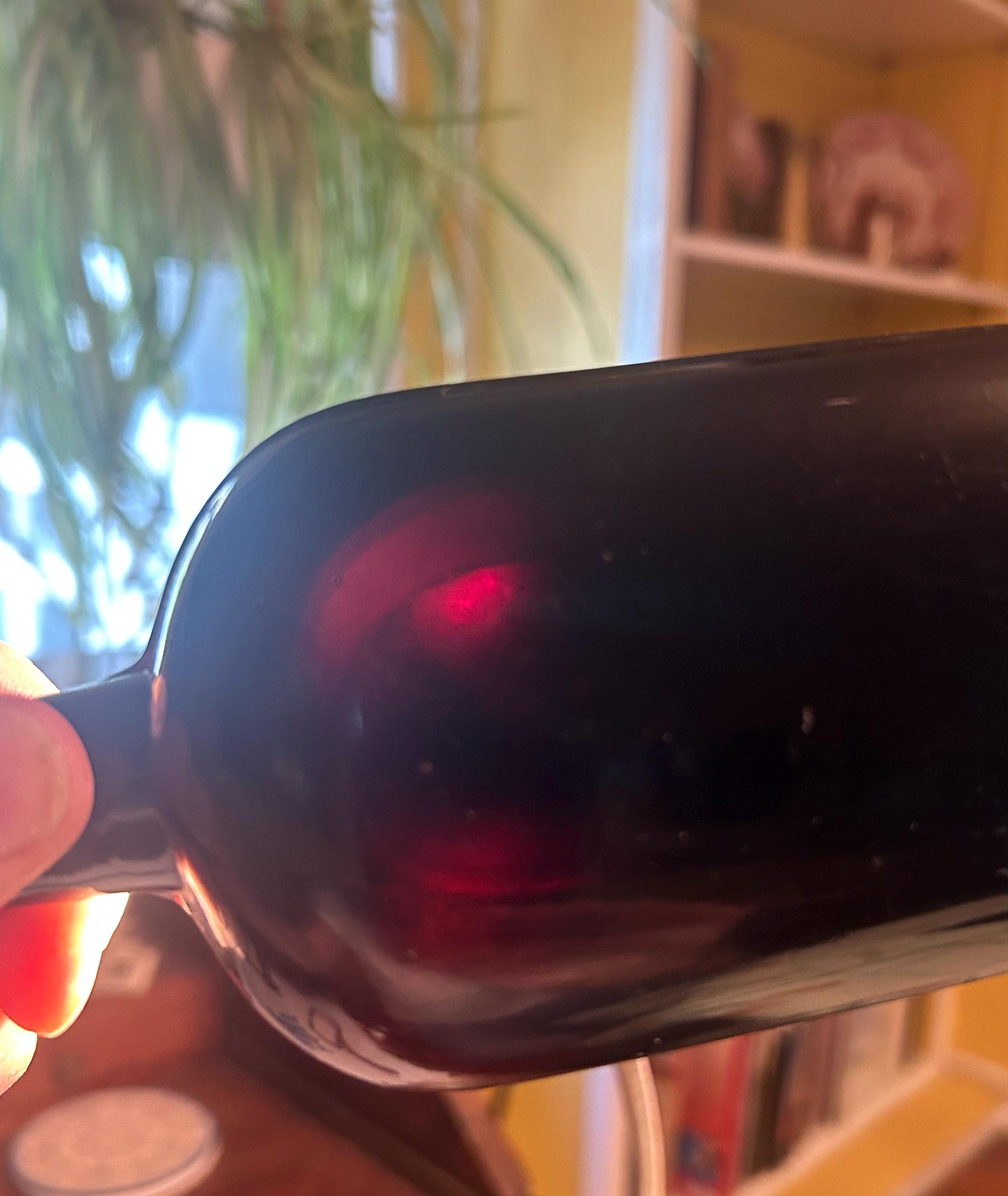
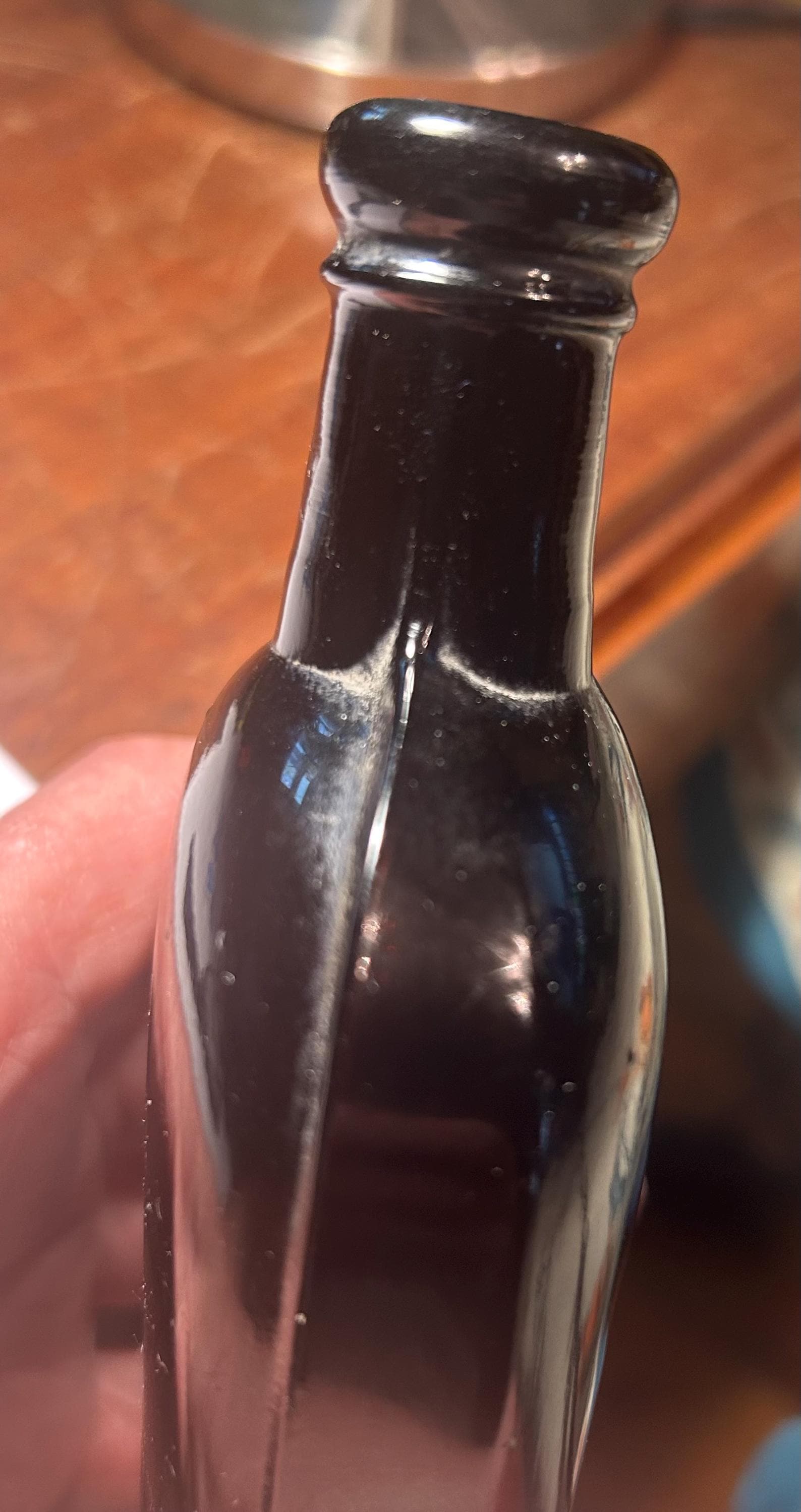
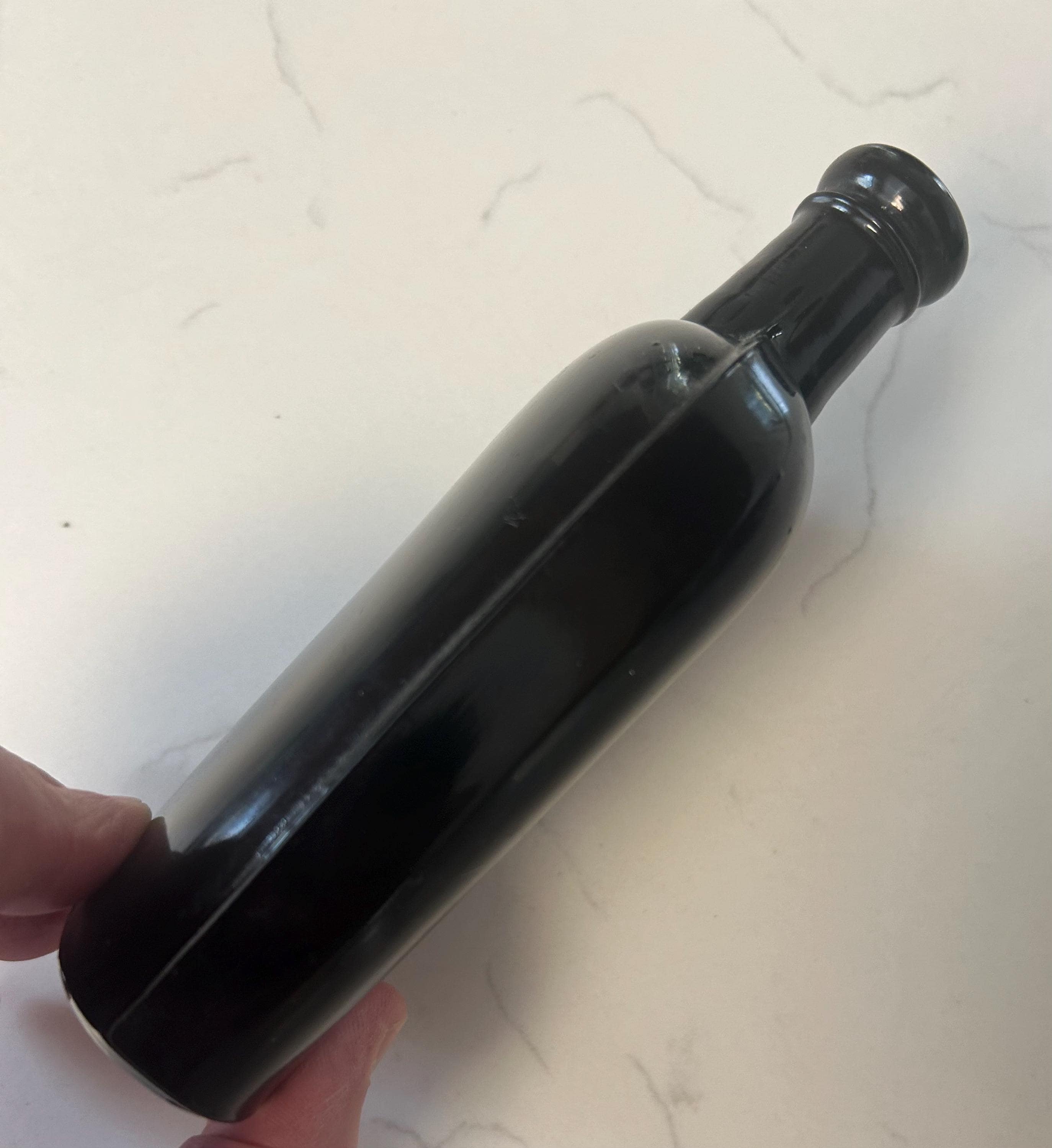
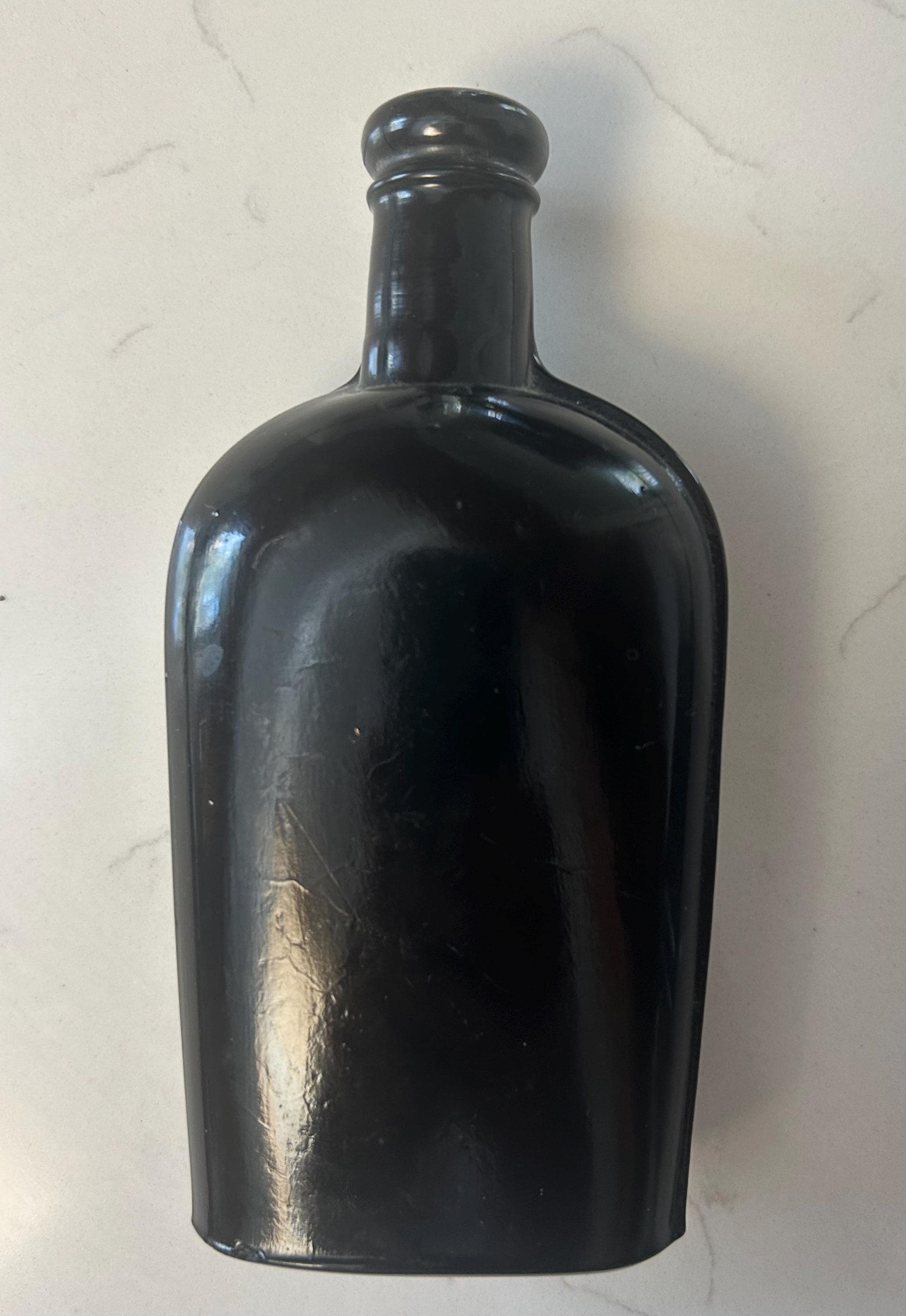
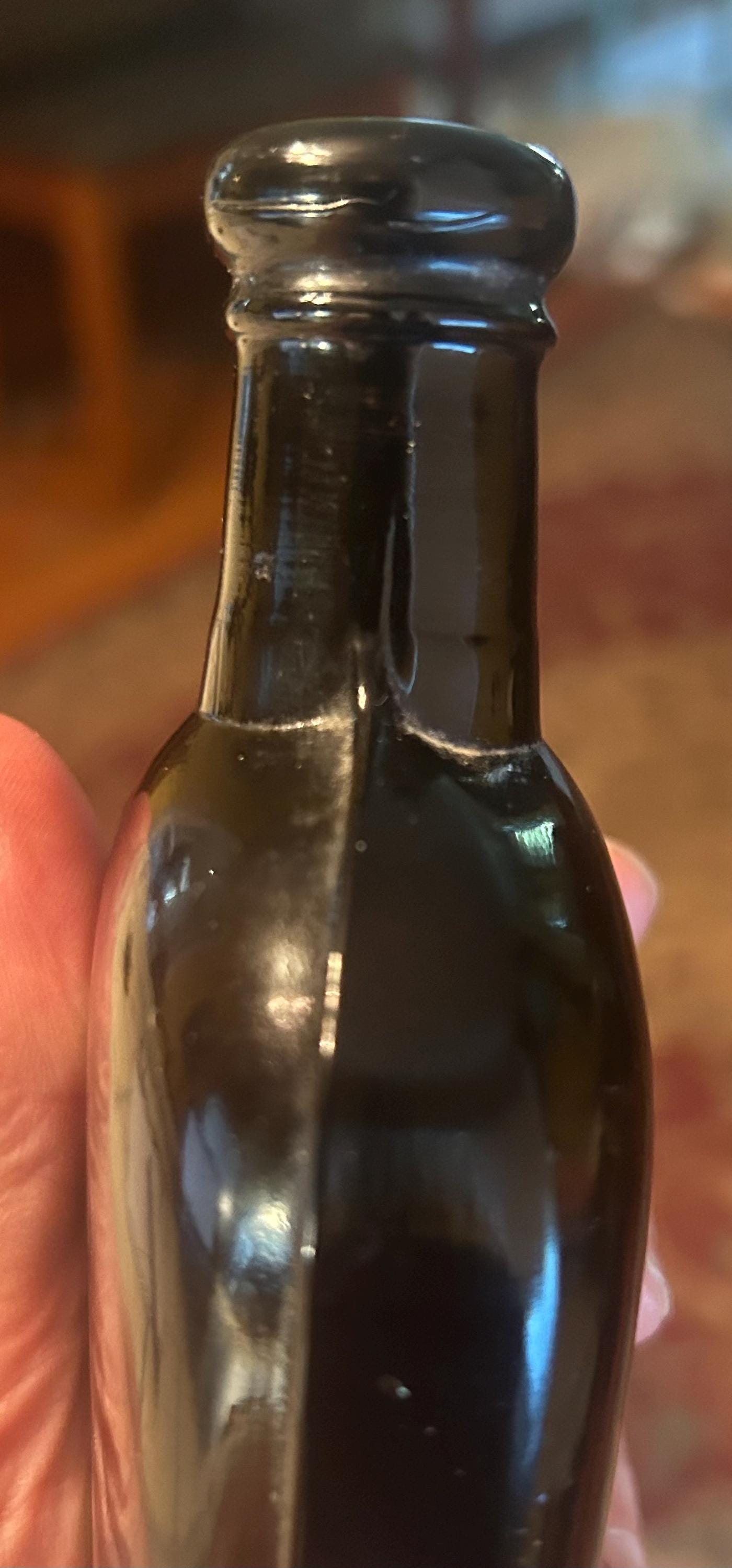
A striking late 19th-century medicine or tonic bottle in deep “black glass” that reveals a rich ruby red glow when held to the light. Standing approximately 6¼ inches tall and 3 inches wide, this bottle has a classic rounded shoulder and narrow neck with a smoothly tooled lip—an indicator of hand finishing during the transitional period of American bottle making (circa 1880–1900).
Though it appears nearly opaque at first glance, strong backlighting brings out a vivid cranberry-red hue, a highly desirable trait among collectors. This type of glass was often used for medicines, bitters, or chemical storage, helping protect contents from light while offering a visually appealing display.
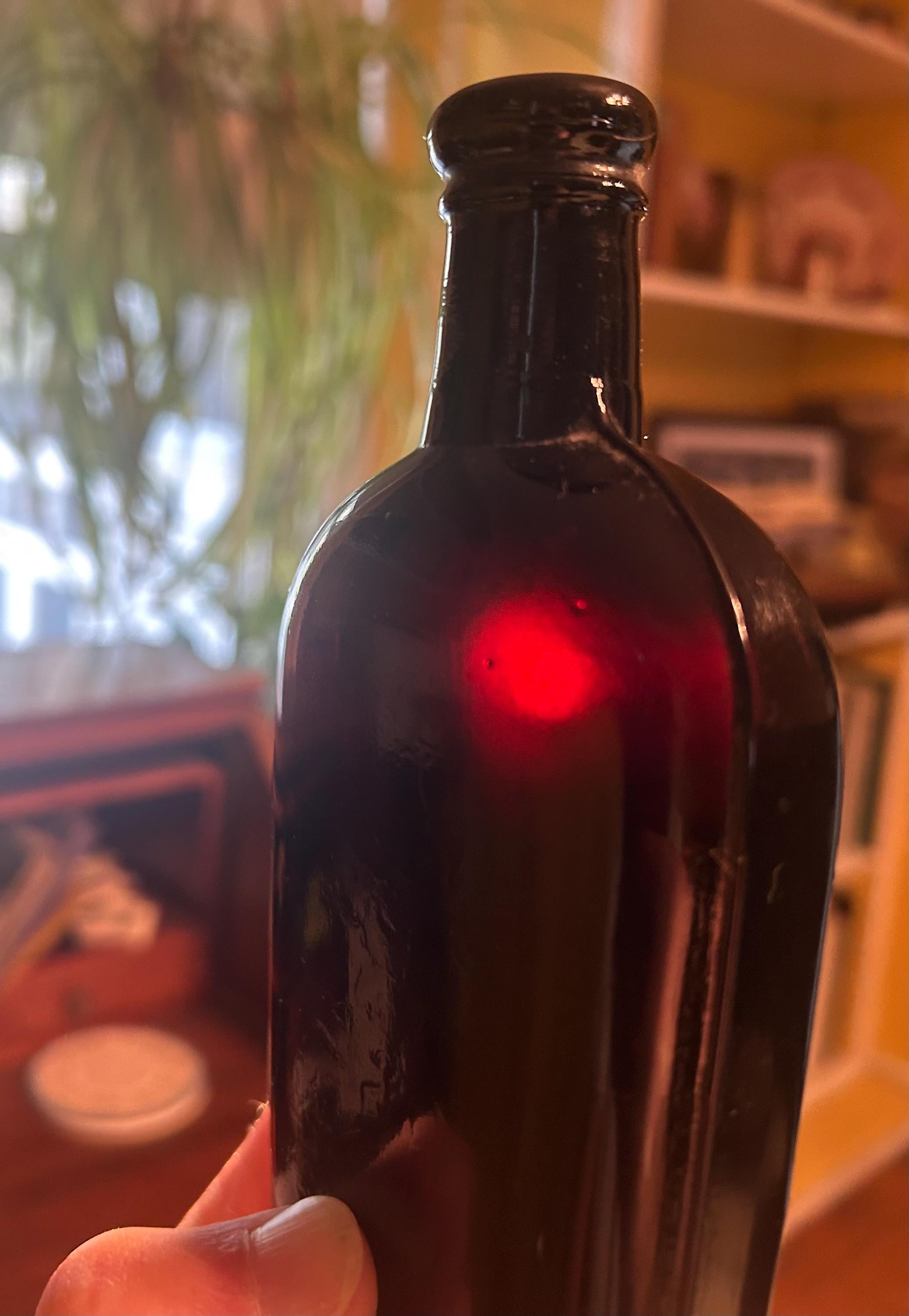
The bottle is unembossed, giving it a clean, timeless look that fits well in both antique collections and rustic décor settings. Mold seams stop below the lip, consistent with hand-finished production methods of the era.
Details:
Height: approx. 6¼ inches
Width: approx. 3 inches
Color: Appears black, glows ruby red in light
Era: Late 19th century (circa 1880–1900)
Seam stops below the lip plus a strong ruby flash
Condition: Good antique condition with light surface wear consistent with age; no major chips or cracks noted
A beautiful and authentic piece of early glass, perfect for collectors of antique bottles, apothecary items, or anyone drawn to the rich character of 19th-century utilitarian objects.
Shipping from United States
Processing time
1-3 business days
Estimated shipping times
- North America : 3 - 5 business days
I'll do my best to meet these shipping estimates, but can't guarantee them. Actual delivery time will depend on the shipping method you choose.
Customs and import taxes
Buyers are responsible for any customs and import taxes that may apply. I'm not responsible for delays due to customs.
Payment Options
Returns & Exchanges
I gladly accept returns
Just contact me within: 3 days of delivery
Ship items back to me within: 7 days of delivery
I don't accept exchanges or cancellations
But please contact me if you have any problems with your order.
The following items can't be returned or exchanged
Because of the nature of these items, unless they arrive damaged or defective, I can't accept returns for:
- Custom or personalized orders
- Perishable products (like food or flowers)
- Digital downloads
- Intimate items (for health/hygiene reasons)
- Items on sale
Conditions of return
Buyers are responsible for return shipping costs. If the item is not returned in its original condition, the buyer is responsible for any loss in value.
Frequently Asked Questions
Gift wrapping and packaging
Yes